
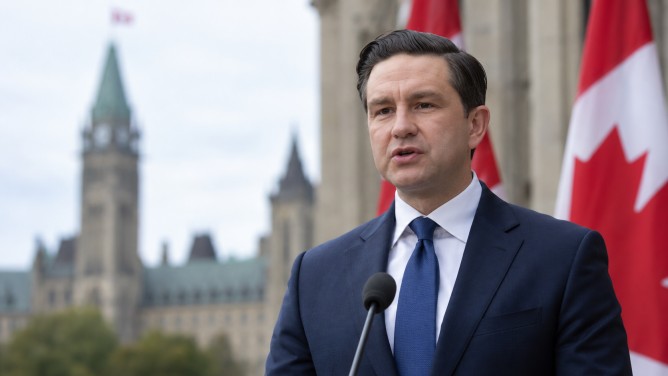
The proposal to strengthen ties between Canada and the European Union could lead to significant shifts in the nation’s economic and policy landscape, sparking debate among Canadian leaders. Opposition leader Pierre Poilievre expressed strong opposition to the idea, particularly criticizing the potential adoption of European taxes, laws, and immigration policies.
During a rally in Brantford, Ontario, Poilievre emphasized that Canada should not become the “28th state of the European Union.” He noted that Canada already benefits from a free trade agreement with Europe and maintains close defense relations through NATO, suggesting that further integration is unnecessary and potentially detrimental.
This discussion gained momentum following remarks by European Commission President Ursula von der Leyen, who showed support for Canada becoming the EU’s first “associate member.” Such a partnership could expand opportunities for young Canadians and enhance financial service integration between the regions.
Prime Minister Mark Carney has expressed an openness to deepening ties with Europe. He indicated that the proposed partnership would be subject to parliamentary debate and a vote, ensuring that lawmakers have a say in the matter. Carney’s stance underscores a contrasting vision to Poilievre’s, focusing on the potential benefits of closer cooperation with the EU.
As the debate unfolds, the implications of such a partnership remain a topic of considerable interest and scrutiny within Canada. The nation’s approach to this proposal will likely shape its economic and political relationships with Europe in the coming years.