
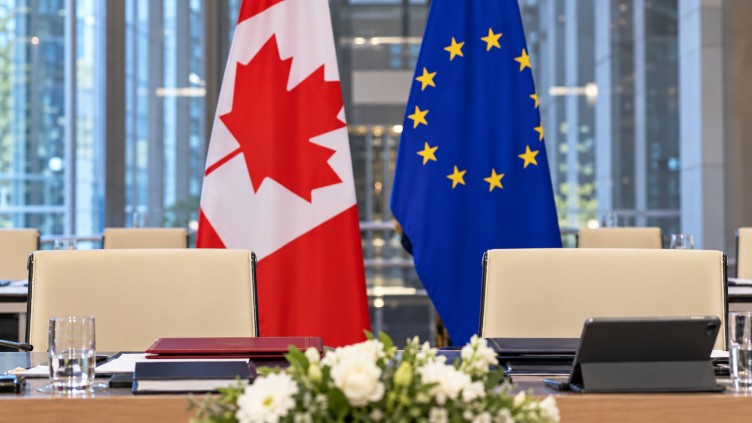
Canada and the European Union have initiated a strategic partnership named the Alliance for the Future, designed to bolster economic ties, safeguard democratic principles, and reduce reliance on external powers amid escalating geopolitical tensions. Announced at a summit in Montreal by Canadian Prime Minister Mark Carney and European Commission President Ursula von der Leyen, the alliance seeks to address pressing global challenges such as trade disputes, climate change, and threats to democratic institutions.
A significant component of the agreement includes Canada’s participation in a €90 billion support loan for Ukraine. Both Canada and the EU intend to deepen their economic integration by reducing trade and travel barriers, strengthening supply chains, and expanding educational exchanges, thereby enhancing economic resilience.
The partnership places a strong emphasis on artificial intelligence and advanced technology. By collaborating on AI development, Canada and the EU aim to lessen their dependence on leading American tech companies. Additionally, an agreement will grant Canadian researchers and businesses access to Europe’s supercomputing network, facilitating AI training and research.
In their address, the leaders underscored the critical need for secure supplies of energy, critical minerals, and semiconductors. They argued that enhanced cooperation would shield businesses and consumers from economic disruptions and external trade pressures.
The alliance also explores the potential for Canada to attain an associate membership status with the EU, establishing a closer relationship without full EU membership. This possibility will be further discussed in a summit scheduled for 2027.
The initiative underscores the efforts by Canada and European nations to diversify international partnerships, strengthen economic resilience, and promote shared democratic values amidst shifting global political and economic landscapes.