
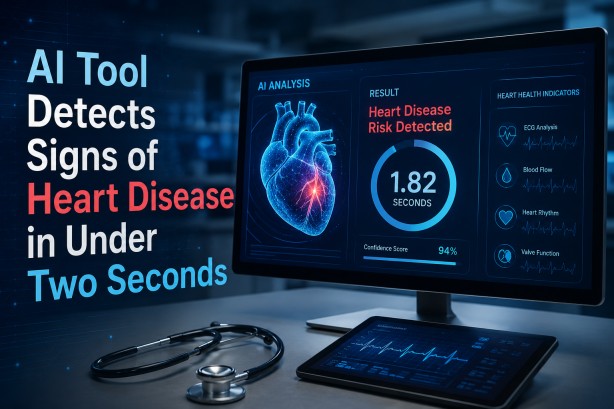
In a significant advancement in medical technology, doctors have crafted an artificial intelligence tool capable of rapidly analyzing routine electrocardiograms (ECGs) to pinpoint patients at elevated risk of heart failure and heart valve disease. This innovative AI can process ECGs in under two seconds, offering a swift assessment that could transform patient care.
The AI tool, trained on millions of ECGs, is adept at identifying patterns often missed by the human eye during standard assessments. In a comprehensive trial in the United States involving 67,000 participants, the AI demonstrated remarkable accuracy, identifying up to 81% of individuals with heart failure and up to 90% of those with heart valve disease. Such precision underscores its potential in enhancing diagnostic processes.
Given that ECGs are among the most frequently utilized medical tests—conducted about one billion times globally each year—this AI tool could significantly streamline the diagnostic pathway for heart disease. Presently, patients suspected of having heart issues often face lengthy waits for echocardiograms, a more detailed test. The AI tool’s ability to highlight high-risk patients could help prioritize those who need further testing, expediting treatment initiation and potentially improving outcomes.
Moreover, researchers are optimistic about the broader applications of this technology. They envision a future where the AI could also scan ECGs conducted for unrelated health checks, thereby uncovering undiagnosed heart conditions. This could lead to earlier interventions and better management of cardiac diseases.
Looking ahead, the development team is investigating the feasibility of portable AI-powered ECG devices. Such devices could be employed by healthcare providers to facilitate early detection and intervention, making critical care more accessible and timely for patients worldwide.