
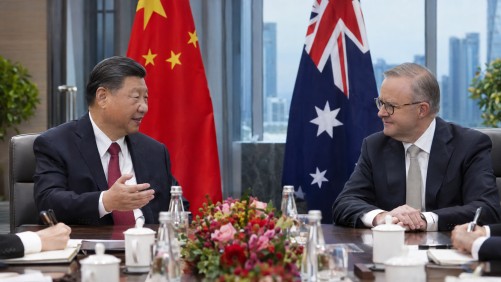
Chinese President Xi Jinping has acknowledged a significant enhancement in diplomatic relations with Australia, highlighting what he described as a “comprehensive turnaround” since Australian Prime Minister Anthony Albanese took office. This improvement follows discussions between the two leaders on the sidelines of the Asia-Pacific Economic Cooperation (APEC) summit in Shenzhen.
Xi noted that he and Albanese have met four times since 2022, emphasizing the importance of strengthening cooperation in fields such as agriculture, energy, the green economy, and artificial intelligence. The dialogue marks a stark contrast to the strained ties under Australia’s previous government, which saw tensions rise after Canberra’s call for an independent investigation into the origins of COVID-19, leading to Chinese trade restrictions on Australian goods.
Prime Minister Albanese reiterated Australia’s commitment to engaging constructively with China while managing existing differences, particularly in areas impacting regional security and trade. He underscored the significance of China’s economic dynamics on Australia, given China’s status as its largest trading partner.
Despite the thaw in relations, some disagreements persist, notably regarding China’s activities in the South Pacific and Australia’s scrutiny of foreign investments in critical minerals. Additionally, concerns have been raised over trade tensions surrounding iron ore. Canberra has expressed unease over China’s plan to centralize the purchasing of iron ore supplies, a move that could potentially disrupt market competition and affect Australia’s bargaining leverage.
In a continuing effort to bolster economic ties, Albanese is scheduled to meet with Chinese Premier Li Qiang in Beijing. This engagement will include a business roundtable featuring key figures from major Australian mining companies such as Rio Tinto and BHP, alongside Chinese business representatives.