
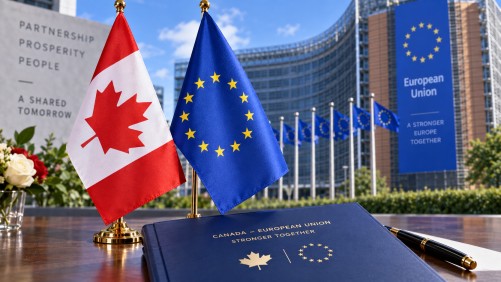
Canada is poised to deepen its partnership with the European Union as it considers an invitation to become the bloc’s first “associate member.” This move signals a potential shift in global alliances and could lead to enhanced economic security and prosperity for both parties. The proposed membership may open new avenues for cooperation in critical sectors such as energy, artificial intelligence, and cybersecurity.
The initiative, announced by European Commission President Ursula von der Leyen, underscores shared democratic values and mutual interests between the EU and Canada, including their stances on climate policy and the ongoing conflict in Ukraine. The EU and Canada are keen to expand their existing trade relationship into a broader alliance that could include collaboration in the fields of quantum computing, batteries, and defense.
As the EU and Canada prepare for an October summit to deliberate on future relations, the notion of an associate membership marks uncharted territory; the EU has not established a formal category for such a role. Details regarding Canada’s potential access to the EU’s single market and its various programs remain under discussion, with much still to be resolved about how this partnership would function practically.
Canada’s Prime Minister Mark Carney has previously advocated for strengthened ties with Europe, viewing it as a strategic move to diversify Canada’s international partnerships amid evolving geopolitical dynamics. This proposal comes at a time when both Canada and the EU are navigating increased tensions with the United States, prompting them to explore alternative alliances.
The discussions surrounding this proposal highlight a strategic effort by both the EU and Canada to adapt to changing global trade and security conditions. The outcome of these talks could redefine transatlantic relations and set a precedent for future collaborations between the EU and non-member countries.