
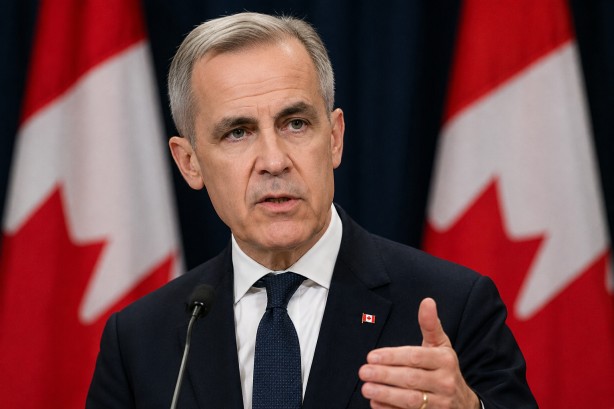
In response to newly imposed U.S. tariffs, Canadian Prime Minister Mark Carney has vowed to take decisive action to uphold Canada’s national interests. Speaking at a gathering of provincial and territorial leaders in Charlottetown, Carney assured that his administration is steadfast in its dedication to supporting Canadian workers, farmers, businesses, and families amidst escalating trade tensions with the United States.
The tensions have heightened following U.S. President Donald Trump’s announcement of an additional 50% tariff on a range of Canadian products. The targeted goods include certain dairy items, alcoholic beverages, motor vehicles, and associated products, with these new tariffs slated to come into effect on August 19. Carney condemned these measures, highlighting that they are in violation of the Canada–United States–Mexico Agreement (CUSMA) and labeling them as another instance of unilateral trade action by Washington.
Despite the brewing trade dispute, Carney remains engaged in dialogue with the U.S., confirming a recent conversation with President Trump. During this discussion, both leaders agreed on the need to enhance trade negotiations to resolve the ongoing differences. Carney’s stance underscores Canada’s commitment to safeguarding its economic interests while seeking constructive engagement with its largest trading partner.
The announcement of increased tariffs has undoubtedly added strain to the already complex trade relationship between the two North American neighbors. However, Carney’s proactive approach signals a determination to navigate these challenges through diplomatic channels, emphasizing the importance of fair and balanced trade practices under existing agreements like CUSMA.
As the situation unfolds, Canada’s leadership appears poised to defend its economic landscape against measures perceived as unfair, while maintaining open lines of communication with the United States. The coming weeks will be pivotal in determining the trajectory of these trade discussions and their implications for both countries’ economies.