
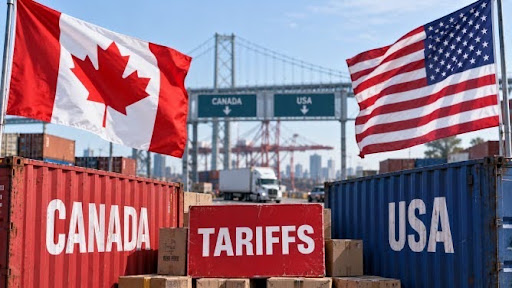
In a significant escalation of trade tensions, Canada has implemented retaliatory tariffs on American imports, amounting to billions of dollars. These new tariffs, ranging from 15% to 50%, came into effect at 12:01 a.m. on Tuesday and target approximately $20 billion worth of U.S. goods. Among the products impacted are steel, dairy goods, appliances, agricultural equipment, pulp and paper, and electronics. This move by Canada follows the United States’ imposition of a 50% tariff on an equivalent value of Canadian goods.
Canadian Prime Minister Mark Carney has responded to these developments by announcing that Canada will accelerate its efforts to diminish its economic reliance on the U.S. and is actively seeking to strengthen trade ties with other nations. Additionally, U.S. President Donald Trump has imposed tariffs on Canadian products, including automobiles and raw materials, alleging that Canada has been exploiting the United States. The affected Canadian exports, which make up about 5.5% of the country’s exports to the U.S., include items such as hockey sticks and cement.
The trade dispute has further strained relations between the two neighboring countries, extending into broader diplomatic disagreements. President Trump has threatened to limit the sales of Canadian aircraft manufacturer Bombardier within the U.S. unless the company relocates more of its manufacturing operations to American soil. This threat has added another layer of complexity to the already tense trade environment.
Talks aimed at resolving the trade issues between Canada and the U.S. collapsed in August after both countries failed to come to an agreement. Canadian officials have cited the introduction of additional demands and restrictions by the U.S. as unacceptable conditions that led to the breakdown of negotiations. The ongoing trade conflict and the lack of resolution in negotiations highlight the deepening economic and diplomatic rift between the two countries.