
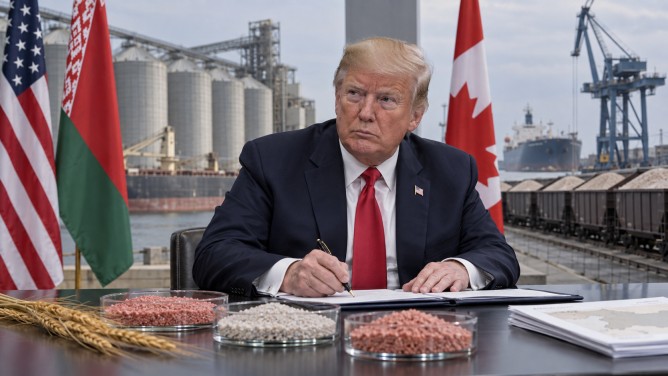
The United States is poised to potentially shift its agricultural supply chain dynamics with a proposed potash fertilizer deal with Belarus, a move that could significantly lower costs for American farmers and reduce dependency on Canadian imports amid ongoing trade tensions. President Donald Trump announced that this agreement aims to secure potash at prices more favorable than those currently offered by Canada, which stands as the primary supplier for the U.S.
This development arises as the Trump administration intensifies trade disputes with Canada, seeking alternatives to diversify its import sources. Potash, an essential component in fertilizer production, is critical for the agricultural sector, and a cheaper supply could alleviate financial pressures on U.S. farmers and ranchers.
While Canada remains the dominant exporter of potash to the United States, Belarus and Russia also contribute to the market share. The proposed deal with Belarus not only promises economic benefits but also hints at a strategic geopolitical maneuver, as the U.S. seeks to recalibrate its diplomatic relations with Belarus, a close ally of Russia.
Recent easing of certain sanctions on Belarus by the U.S. followed the release of political prisoners, signaling a potential thaw in relations. However, Belarusian President Alexander Lukashenko’s administration continues to face global criticism over its handling of political dissidents. Moreover, Belarus’s support for Russia during the conflict in Ukraine has attracted Western sanctions, adding complexity to any potential trade agreement.
Should the U.S.-Belarus potash deal come to fruition, it could have broader diplomatic repercussions, influencing not only agricultural economics but also international relations. The agricultural sector’s reliance on imported potash underscores the significance of this development, as stakeholders await further details on how this agreement might reshape the U.S. fertilizer supply landscape.