
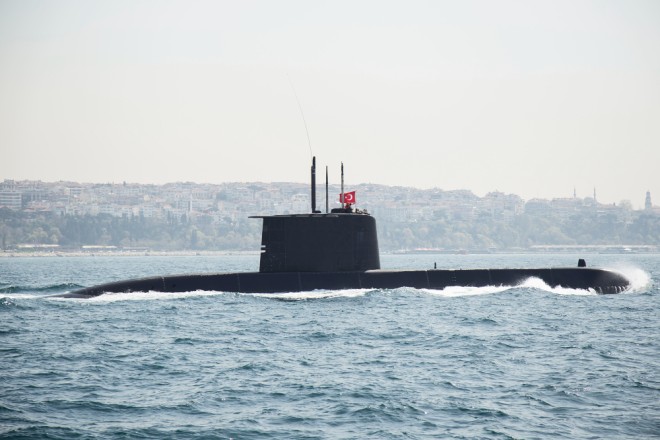
In a significant development for Canada’s defense sector, the country is poised to reveal its choice for a new fleet of up to 12 submarines. This procurement project, valued at tens of billions of dollars, ranks among the largest military acquisitions in Canadian history. The decision has narrowed down to two primary contenders: South Korea’s Hanwha and Germany’s ThyssenKrupp Marine Systems (TKMS). While both companies’ submarine designs fulfill the operational needs of the Canadian Navy, the competition has been notable for its focus on marketing strategies, economic incentives, and geopolitical factors, rather than merely the technical specifications of the submarines.
Hanwha has been actively promoting its KSS-III submarine through an extensive advertising campaign across Canada, emphasizing its capability to expedite delivery. The company has also highlighted potential industrial collaborations and economic investments within Canada. The KSS-III submarine boasts larger capacity and the ability to deploy ballistic or cruise missiles via vertical launch systems, which forms a key part of its appeal.
On the other hand, TKMS has leveraged its experience as a prominent supplier of conventional submarines to NATO allies to promote its offering. The 212CD submarine from TKMS includes advanced stealth technology and offers interoperability advantages with NATO partners such as Germany and Norway, both of which are acquiring the same model. This aspect is particularly appealing given Canada’s commitments to its NATO alliances.
Defense analysts have observed that the competition between Hanwha and TKMS remains intensely close, with both companies presenting compelling military, economic, and strategic advantages. Beyond the performance of the submarines themselves, the Canadian government is expected to consider factors such as industrial investments, job creation, and potential for long-term partnerships in its final decision. Additionally, alliance considerations will play a crucial role in the evaluation process.
The procurement process has been characterized by its atypical nature, as the government has accelerated timelines and placed a strong emphasis on the economic benefits that accompany defense requirements. This reflects a broader strategy to integrate industrial growth with military enhancements, ensuring that the eventual selection aligns with Canada’s strategic goals on multiple fronts.