
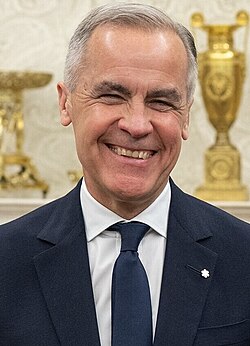
Canadian Prime Minister Mark Carney has declared that Europe need not succumb to a world marked by brutality and isolationism, suggesting instead that it could serve as the foundation for reconstructing a new global order. Carney made these remarks while attending the European Political Community (EPC) meeting in Yerevan, Armenia—the first time a non-European leader has participated in such a gathering. The meeting kicked off against a backdrop of heightened tensions in the Strait of Hormuz and renewed uncertainties regarding the United States’ commitment to NATO.
Carney indicated that the period of American global leadership might be waning, suggesting that Europe will play a pivotal role in rebuilding the international order. “We don’t think that we’re destined to submit to a more transactional, insular and brutal world,” he stated, emphasizing the importance of gatherings like the EPC. He stressed the significance of Europe’s values and strength in defending a rules-based international order, particularly as global integration becomes weaponized by certain powers.
The EPC meeting, now in its eighth iteration, was strategically held in Armenia to emphasize Europe’s resolve in preventing the country from falling back under Russian influence. Meanwhile, the U.S. decision to withdraw over 5,000 troops from Germany has sparked fresh concerns about NATO’s reliability, a move seen by many as a reflection of President Donald Trump’s dissatisfaction with certain European nations’ support in U.S.-Israeli operations against Iran. This decision has raised alarms about potential further troop reductions in Italy and Spain, where 12,662 and 3,814 U.S. troops are stationed, respectively.
British Prime Minister Keir Starmer voiced concerns over current alliances, noting that they aren’t as robust as desired. He warned that responses to these tensions could shape international relations for generations. French President Emmanuel Macron echoed this sentiment, asserting that Europeans are now taking control of their security by increasing defense spending and crafting joint solutions. Ukrainian President Volodymyr Zelenskyy highlighted the urgency for diplomatic engagement with Russia, emphasizing the necessity of maintaining sanctions unless Russia opts to end the war.
Commenting on the situation, EU foreign policy chief Kaja Kallas expressed surprise at the timing of the U.S. troop withdrawal announcement, underscoring the importance of strengthening NATO’s European pillar. NATO Chief Mark Rutte acknowledged some U.S. disappointment over European hesitancy regarding the Iran conflict but noted that Europe is now offering logistical support and strategically positioning resources. Meanwhile, German Chancellor Friedrich Merz, who skipped the Yerevan summit, reiterated his commitment to maintaining transatlantic relations despite current challenges.