
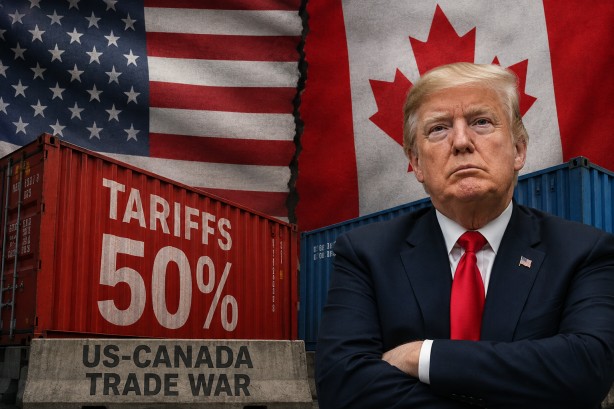
The trade tensions between the United States and Canada have intensified as President Donald Trump announced significant tariffs on Canadian imports following unsuccessful negotiations in Washington. The U.S. administration has imposed 50% tariffs on Canadian goods valued at approximately $20 billion, including items such as hockey sticks and medical supplies. In response to these developments, Canadian Prime Minister Mark Carney has pledged to introduce equivalent tariffs on American products, set to take effect from September 8.
Prime Minister Carney has criticized the U.S. tariffs as a direct affront to Canada, firmly rejecting the demands presented during negotiations. He emphasized that Canada would not capitulate and is poised to implement retaliatory measures on U.S. goods in a “dollar for dollar” fashion. Meanwhile, Jamieson Greer, the U.S. Trade Representative, has justified the tariffs as a strategic move to safeguard American industries and protect supply chains.
This ongoing conflict has raised significant concerns about the stability of the United States-Mexico-Canada Agreement (USMCA), a pivotal trade agreement among the three nations, which governs roughly $2 trillion in annual trade. The agreement is vital for maintaining economic stability and fostering collaboration across North America, and any disruption could have widespread repercussions.
The escalation in the trade dispute casts uncertainty over economic relations between the U.S. and Canada, with potential consequences for businesses and consumers on both sides. The imposition of tariffs could lead to increased costs for imported goods, affecting various industries and possibly leading to higher prices for consumers. Both nations now face the challenge of navigating these tensions while working to preserve and strengthen their longstanding economic partnership.